Words by Hugo, arrangements by Fran
We love flowers, but some of our favourite displays at The Fisheries barely contain a flower at all.
Foliage can be just as beautiful, and often much more interesting. A few branches in a large vase can completely change a room, bringing height and a sense of the season with them.
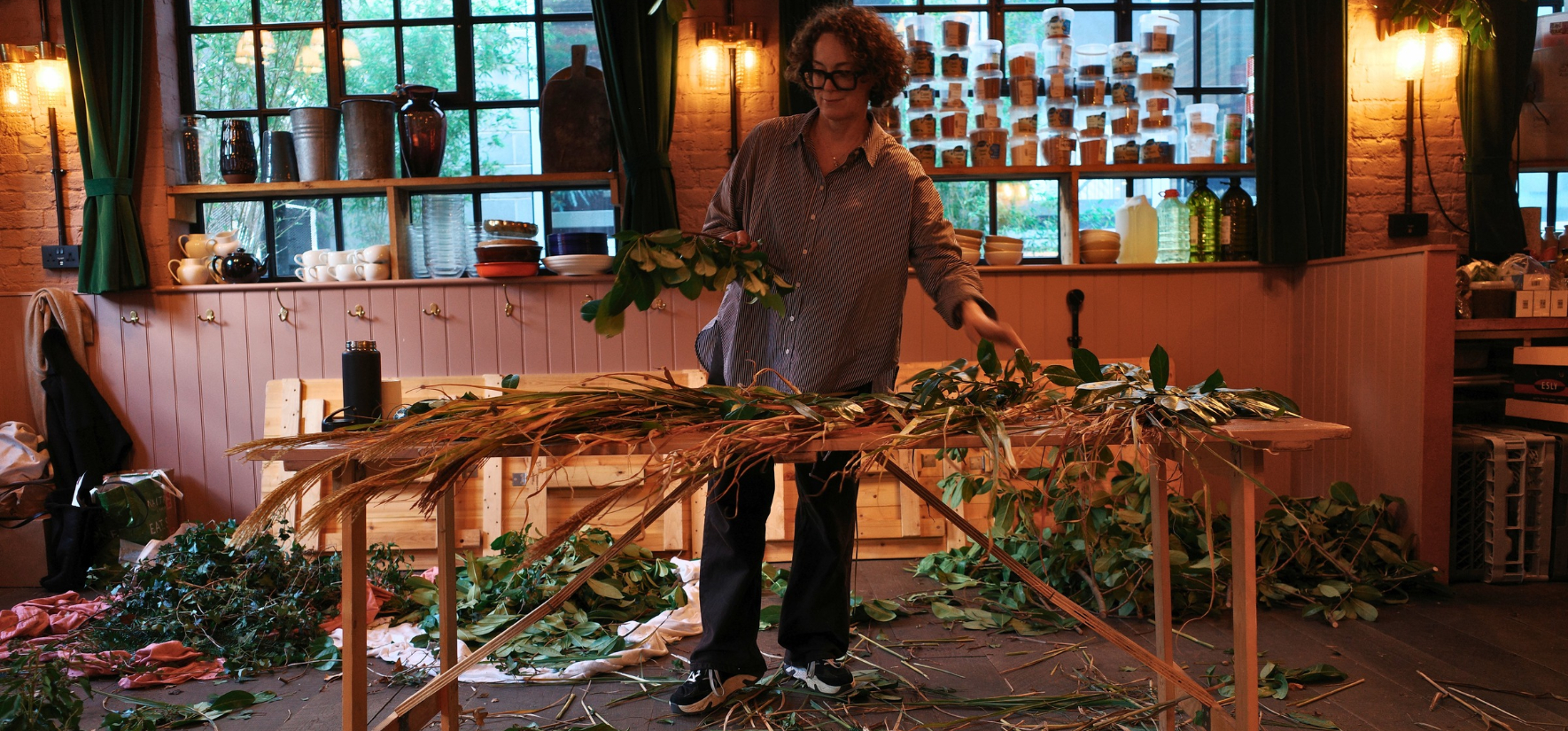
We use foliage throughout The Fisheries: on the tables at our Workers’ Lunch, for events, in reception and in the Dining Room. Much of what you see has been grown by us and picked when it looks its best, so the displays tend to follow what is happening outside rather than what we might order in.
At this time of year, that becomes particularly interesting.
Late autumn is often thought of as the point when the garden is coming to an end. The flowers disappear, leaves begin to fall and everything starts to retreat for winter.But in many ways this is when foliage becomes more important.
The bright greens of summer give way to deeper, softer shades. Leaves turn bronze, copper and russet. Evergreens begin to stand out. Seed heads that might have been overlooked in summer suddenly become sculptural in their own right.
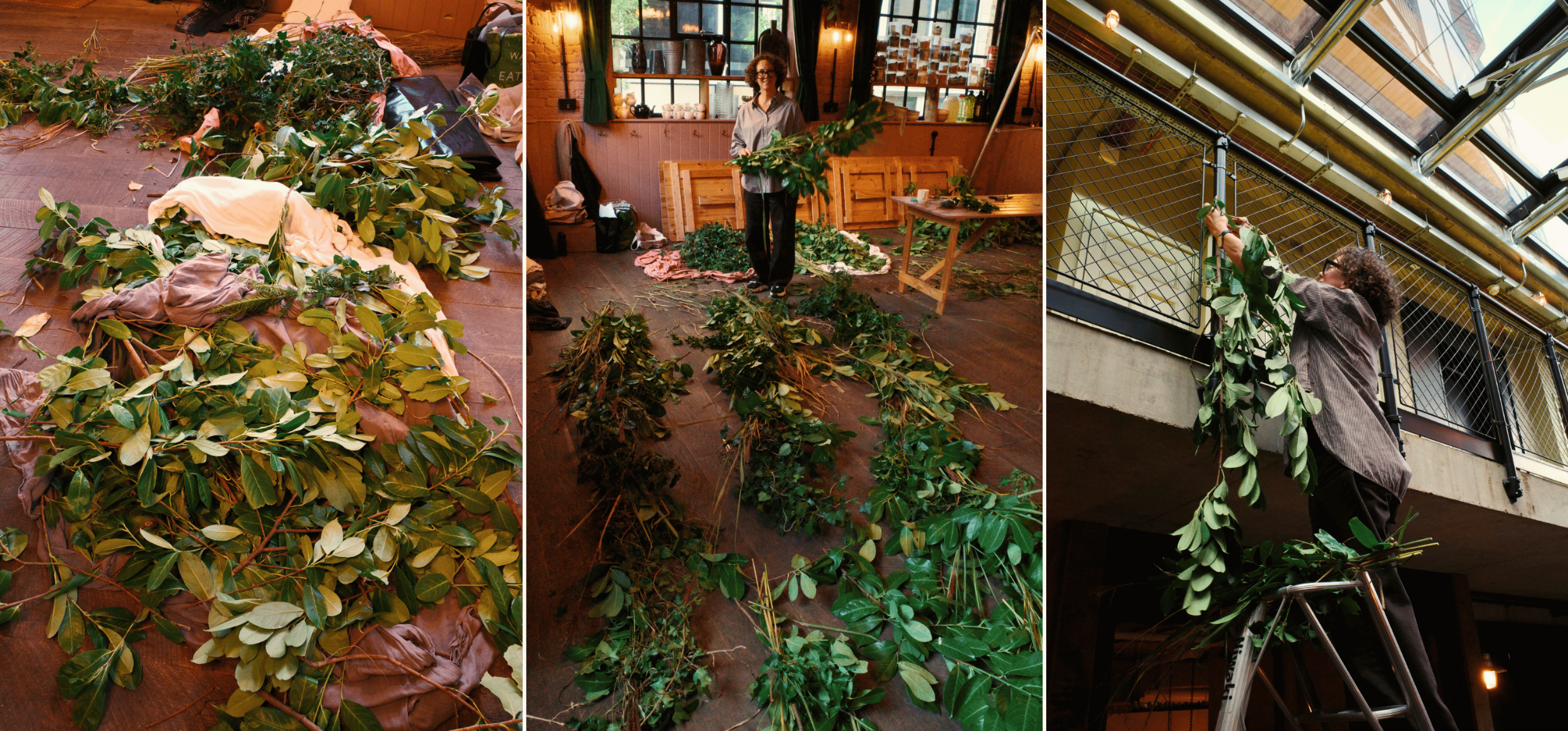
Honesty, alliums and other dried seed heads bring shape and texture. Ivy gives movement and can be used in great lengths. Laurel provides strong, glossy green leaves and structure. Even bare branches can be striking, particularly when their form is allowed to do the work.
And then there are the things that sit somewhere between flowers and foliage. Limonium, for example, dries beautifully and retains its colour and structure long after most fresh flowers have disappeared.
One of the pleasures of foliage is that it doesn’t need to be complicated. In fact, the less arranged it looks, the better. We tend to choose branches for their shape and character rather than trying to make everything match. A slightly crooked stem, an unusual leaf or something beginning to turn colour can often be the bit that makes the whole thing work.
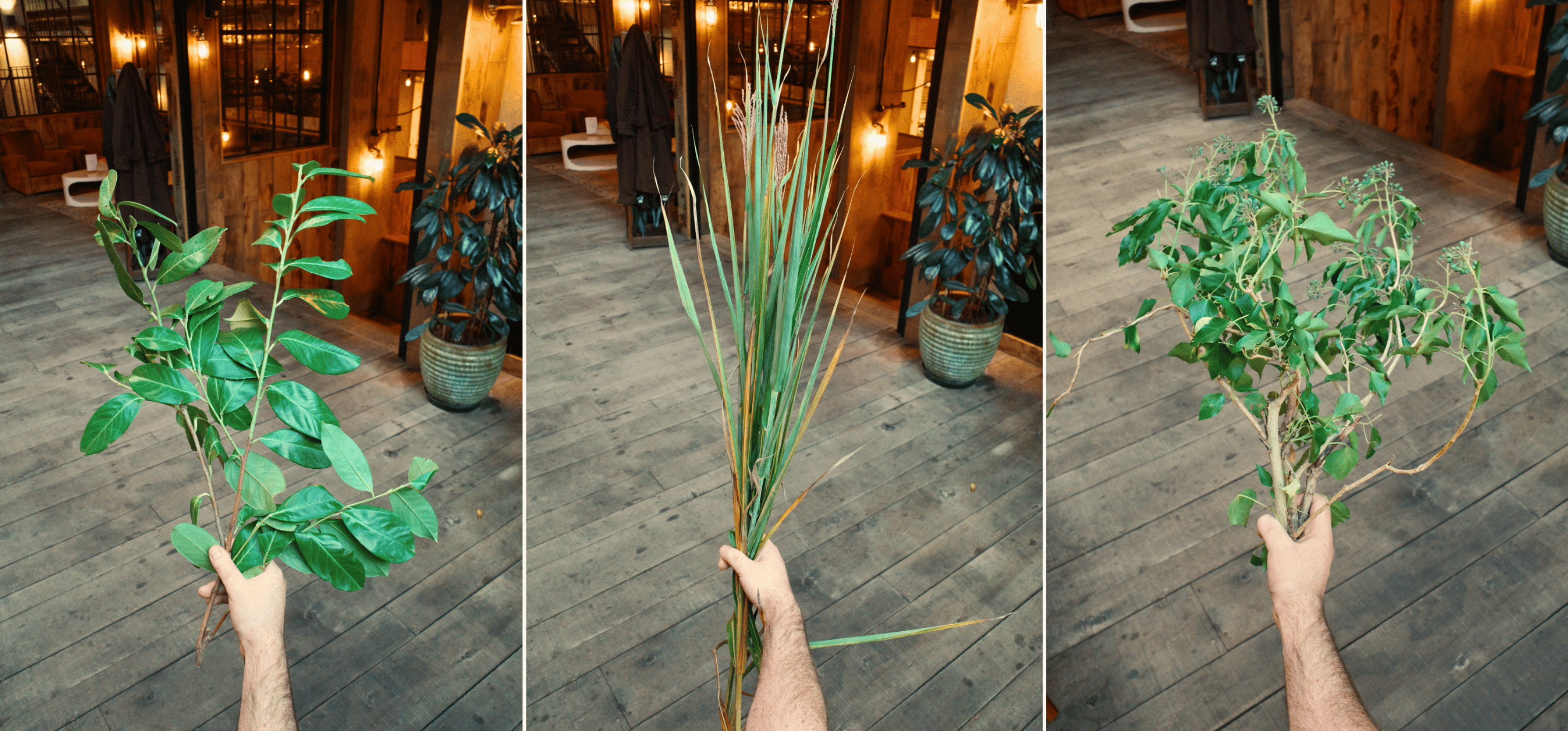
Scale matters too. A handful of long branches in the right vase can have far more impact than a large bunch of flowers, especially in a big space. They create a sort of architecture in a room without making it feel overly decorated.
This transition takes us naturally into Christmas.
Rather than filling the building with artificial decorations, we use what the garden gives us. Reception and the Dining Room are dressed with laurel and ivy, dried limonium, honesty, allium seed heads and whatever other seasonal material has caught our eye. Even the star on top of our Christmas tree comes from the garden: we use the extraordinary dried seed head of Allium schubertii, whose great firework-like shape seems almost purpose-made for the job.
It means our Christmas decorations change slightly every year because they depend on what has grown well and what we have available.
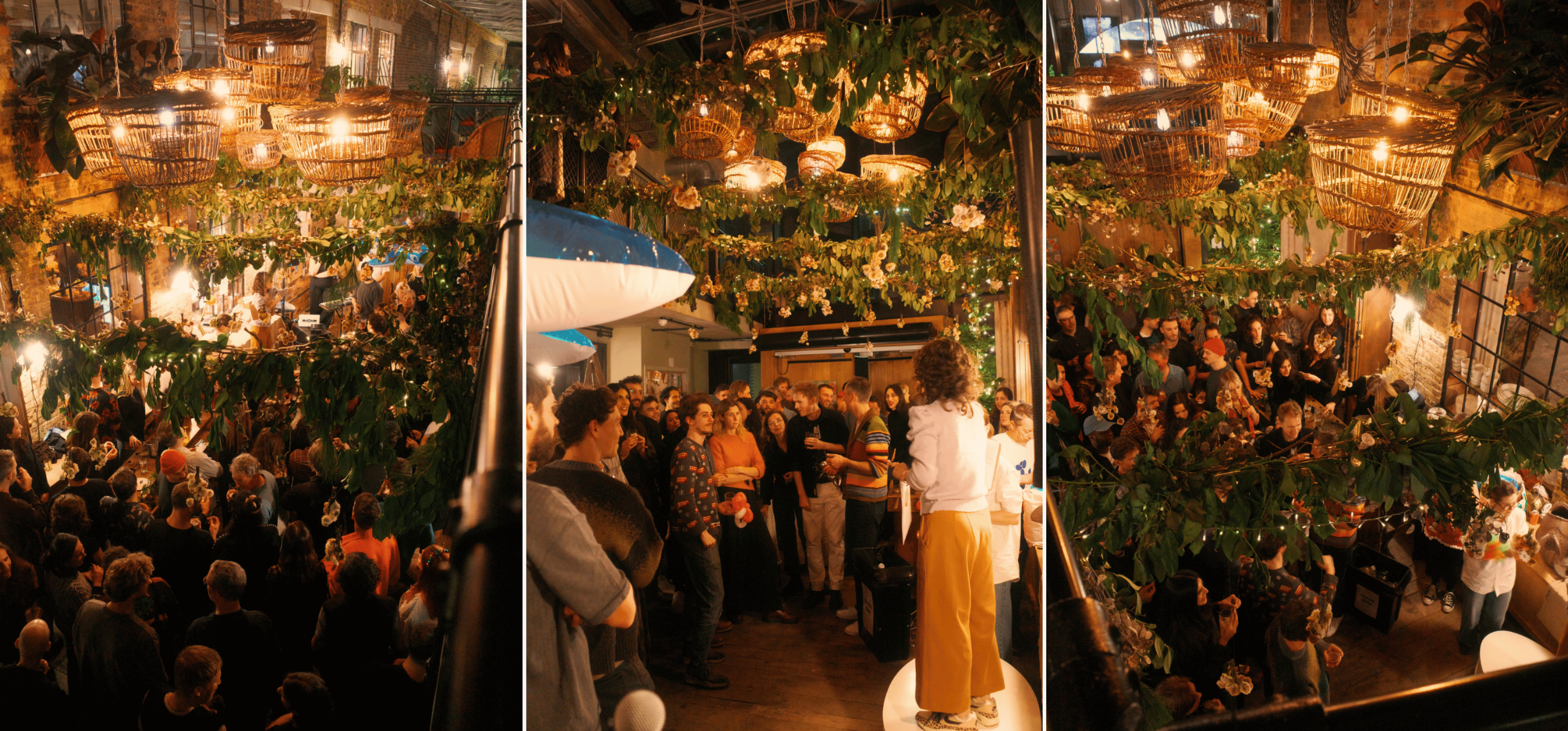
We like that.
There is something much more satisfying about bringing armfuls of greenery and seed heads in from outside and using them to transform the space than unpacking something plasticky from a box. It also gives Christmas a slightly softer feel. The greens are not all one green. The dried material introduces silver, parchment, brown and faded colour. Seed heads catch the light, while branches bring scale. Because much of it has grown with us through the year, it feels connected to the garden.
Of course, foliage is seasonal almost by definition. Rather than deciding what we want and then finding it, we look at what is growing well and work from there. That means the garden never really stops providing things for the building.
Autumn gives us colour and seed heads. Winter gives us evergreens, bare branches and structure. Then, almost before we realise it, the first fresh shoots and blossom arrive and the whole cycle begins again.
Perhaps that is why we like foliage so much. It doesn’t feel like decoration added to a room. It feels like a little bit of what is happening outside has simply found its way in.
If you’re passing through reception this December, do look up at the top of the tree 🎄